
KARC · About us
Kulumsa Agricultural Research Center
Kulumsa Agricultural Research Center (KARC) is a leading agricultural research center operating under the Ethiopian Institute of Agricultural Research (EIAR). Established in October 1967 as the Chilalo Agricultural Development Unit (CADU), KARC has grown into a national center of excellence for agricultural innovation, crop breeding, …
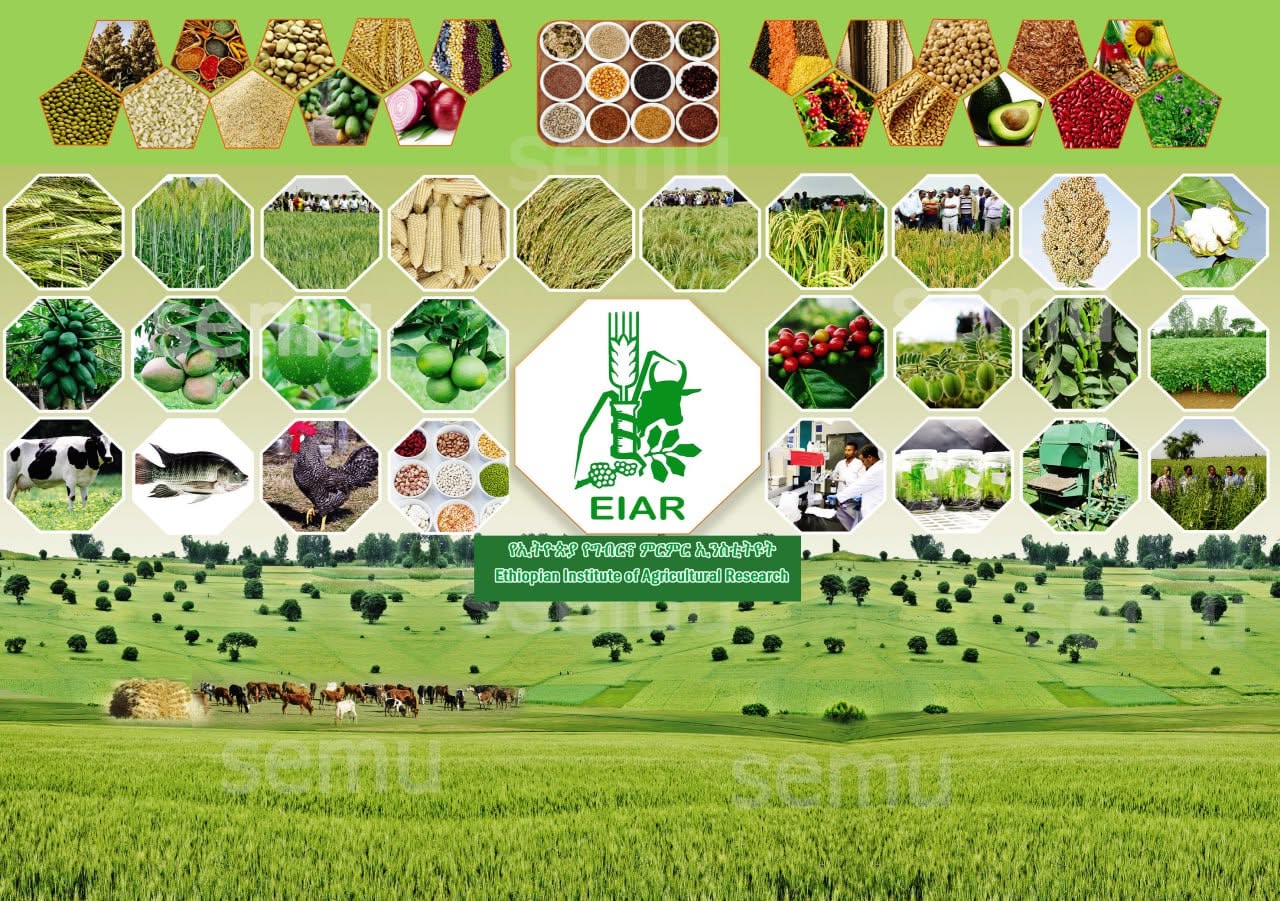
KARC
Research center
Kulumsa, Assela, Ethiopia
Location
karc@eiar.gov.et
Contact email
Why we are here
Our mandate
To conduct applied and adaptive agricultural research, generate technologies, and support sustainable production systems through agroecological characterization, soil and water management, and location-specific research for the Arsi and West Arsi agricultural zones.
Research and innovation
Areas of focus
A multidisciplinary portfolio addressing the needs of Kulumsa, Assela, Ethiopia and the wider agricultural sector.
Our story
From local beginnings to national impact
Kulumsa Agricultural Research Center (KARC) is a leading agricultural research center operating under the Ethiopian Institute of Agricultural Research (EIAR). Established in October 1967 as the Chilalo Agricultural Development Unit (CADU), KARC has grown into a national center of excellence for agricultural innovation, crop breeding, soil and water management, climate adaptation, and mechanization research in Ethiopia.
-
1967
Kulumsa Agricultural Research Center (KARC) was established in October 1967 as part of the Chilalo Agricultural Development Unit (CADU), created through a bilateral agreement between the Government of Ethiopia and the Swedish International Development Agency (SIDA).
-
1987
In 1987, KARC became part of the Institute of Agricultural Research, now the Ethiopian Institute of Agricultural Research (EIAR), and formally adopted its current name, while assuming a national mandate to coordinate bread wheat research, which remains central to its mission.
-
2011
A related mechanization and training initiative began at Kulumsa in 2011 through an Ethio-German collaboration.
Read the full center history
Kulumsa Agricultural Research Center (KARC) was established in October 1967 as part of the Chilalo Agricultural Development Unit (CADU), created through a bilateral agreement between the Government of Ethiopia and the Swedish International Development Agency (SIDA). Initially based in the Chilalo Awraja of the former Arsi administration, the Center began with agricultural research and early-generation seed multiplication under the Ministry of Agriculture. In 1987, KARC became part of the Institute of Agricultural Research, now the Ethiopian Institute of Agricultural Research (EIAR), and formally adopted its current name, while assuming a national mandate to coordinate bread wheat research, which remains central to its mission. A related mechanization and training initiative began at Kulumsa in 2011 through an Ethio-German collaboration. KARC is located in Kulumsa, Arsi zone, Oromia Regional State, approximately 167 km southeast of Addis Ababa at an elevation of about 2,170 meters above sea level. Through its main station and research sites across diverse altitudes, soils, and climatic conditions, the Center conducts research relevant to Ethiopia's major agricultural production areas. Over the decades, KARC has expanded beyond wheat to include barley, highland maize, pulses, oil crops, horticulture, livestock and forage, plant protection, soil and water management, crop management, seed science, food science and nutrition, agricultural economics and extension, and climate and geospatial research. Today, KARC is one of EIAR's prominent research centers, supported by a multidisciplinary team of 254 personnel. The Center generates and adapts agricultural technologies, supports early-generation seed supply, conducts demonstrations and training, provides technical and diagnostic services, and collaborates with national and international partners.
Research in action
From research to impact
How the center’s research contributes to agricultural productivity, resilience, and practical technologies.
| No. | Additional research impact area |
|---|---|
| 7 | Strengthen quality seed supply through early-generation seed multiplication and partnerships with seed-system actors. |
| 8 | Improve livestock productivity and feed availability through forage, animal nutrition and animal health research. |
| 9 | Support food quality, nutrition, processing, safety and post-harvest loss reduction. |
| 10 | Researching socio-economic drivers of technology adoption, production and marketing bottlenecks, participatory research methods, and extension pathways to accelerate technology adoption among smallholders. |
| 11 | Conducting structured field demonstrations, operator training, and institutional capacity-building across public and private sector partners. |
| 12 | Integrating spatial mapping and climate advisory tools to match agronomic practices and mechanization technologies with local farming contexts. |
| 13 | Applied research, prototype validation, testing, and field adaptation of affordable, smallholder-appropriate machinery for Ethiopian farming systems. |
| 14 | Development and refinement of threshers, shellers, grain cleaners, handling equipment, and processing machinery to minimize post-harvest losses and drive value addition. |
| 15 | Advancement of conservation agriculture tools and resilient mechanization suited to varying agro-ecological conditions. |
| 16 | Developing standardized, competency-based Level I-IV training frameworks and safety certification programs. |
| Research area | Technologies, services, and results |
|---|---|
| Barley improvement | KARC released 18 food and malt barley varieties since 2006, including six for moisture-stressed environments along with their production packages. |
| Horticultural agronomy | More than eight improved management practices generated, including fertilizer rates, optimal spacing, seeding rates, harvest timing and pruning recommendations. |
| Soil fertility management | Site- and crop-specific fertilizer management provided. |
| Acid-soil and Vertisols management, and moisture stress | Lime requirement mapping; integrated lime, vermicompost and fertilizer options; acid-soil and Vertisols crop-variety evaluation; and demonstrations/scaling of liming technologies. |
| Plant protection | Rust surveillance and early warning, resistant germplasm evaluation, integrated disease management, fungicide/herbicide verification and weed management. |
| Forage | Ten grass varieties and two legume varieties released/registered with KARC contribution; forage seed produced and training provided. |
| Climate advisories | Seasonal advisories for Belg, Kiremt and Baga and sub-seasonal guidance to support agricultural decisions. |
| Seed system | Early-generation seed multiplication, seed-quality support and collaboration with seed enterprises and cooperatives. |
| Food science and nutrition | Nutritional profiling, food processing and product development, food quality and safety, and laboratory services. |
| Agricultural mechanization technologies | Technologies demonstrated, tested or adapted include conservation-agriculture planters; moldboard ploughs; disc harrows; direct planters; reapers; potato planters and harvesters; lime spreaders; mechanical weeders; urea top-dressers; and small-scale cereal and pulse threshers. |
| Mechanization training and certification | So far, 8,002 participants trained from February 2011 to December 2025 (7,181 male; 823 female), with demonstrations totaling 21,315 person-days. |
| Mechanization reach | A 52% yield improvement in demonstration plots using mechanized planting, tillage and conservation-farming techniques was attained. |
Center programs
Research Programs
41-12
Acid Soil management research program
Kulumsa
Center focus: Kulumsa
21-34
Barley Research Program
21-41
Lowland Oil Research Program
21-36
Maize Research Program
maize